PROJECTS
ASHRAM PROJECT
ASHRAM RARE EARTHS & FLUORSPAR PROJECT
Nunavik, Québec
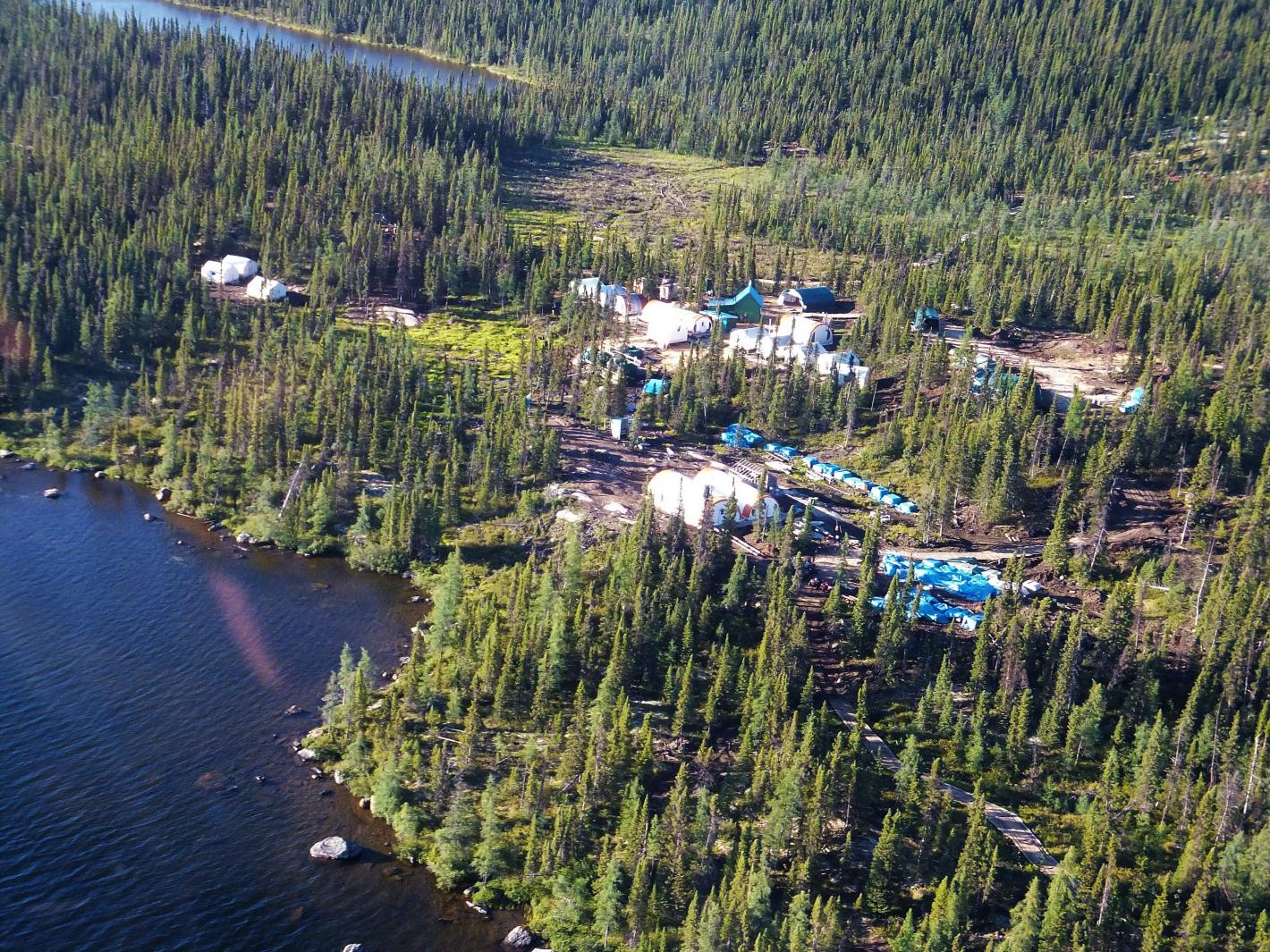
130km south of Kuujjuaq, a Tier-1 mining jurisdiction with strong government support.
The Ashram Rare Earths & Fluorspar Project is a world-class deposit and one of the most advanced rare earth developments in North America. With over A$50 million historically invested in exploration, drilling, resource definition and development studies, Ashram represents a cornerstone asset in Canada’s critical minerals push.
PRELIMINARY ECONOMIC ASSESSMENT
Mont Royal delivered an updated Preliminary Economic Assessment (PEA) for the Ashram Project in June 2026, confirming a large-scale, long-life North American rare earth development opportunity. The PEA outlined average annual production of ~17,466 tonnes of saleable Rare Earth Oxide (REO), including ~4,035 tonnes per annum of NdPr, over an initial mine life of 30 years.
This underpinned robust project economics, including post-tax NPV8% (real) of CAD$2.03B, post-tax IRR (real) of 22.0% and post-tax payback of 3.9 years from commencement of production. Life of Mine (LOM) revenue was estimated at ~CAD$24.6B, with a life-of-mine EBITDA margin of ~62.7%.
Ashram is one of the largest monazite-dominant rare earth deposits in North America, with outstanding potential defined within the PEA to deliver strong upside to the project metrics. Read the full PEA announcement here.
Based on the strong outcomes of the PEA, Mont Royal is now undertaking a Pre-Feasibility Study for the Project development.
Geology
Ashram is hosted within the Eldor Carbonatite Complex, a large intrusive carbonatite system located within the Paleoproterozoic New Québec Orogen.
Rare earth mineralisation is dominated by monazite, with subordinate bastnäsite, parisite and xenotime. The relatively simple and commercially favourable mineral assemblage is considered advantageous for metallurgical recovery and downstream processing. The mineral assemblage is comparable to other major carbonatite-hosted REE systems globally, including Mountain Pass (USA), Niobec (Québec) and Palabora (South Africa).
RESOURCE HIGHLIGHTS
JORC 2012 Mineral Resource Estimate (1 October 2025):
- Indicated: 73.2Mt @ 1.89% TREO & 6.6% CaF₂
- Inferred: 131.1Mt @ 1.91% TREO & 4.0% CaF₂
- High PrNd distribution of ~21% — essential for permanent magnet production.
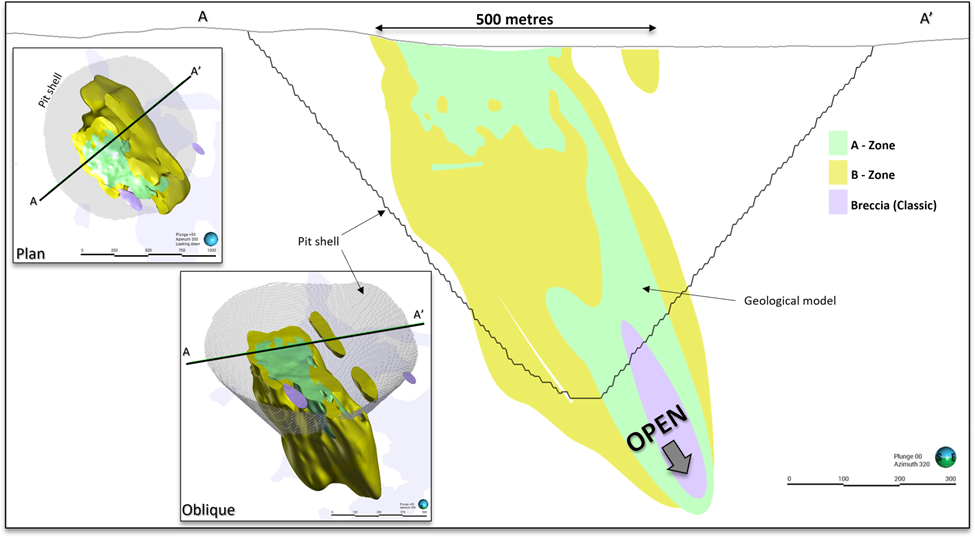
- Open at depth with significant scale potential.
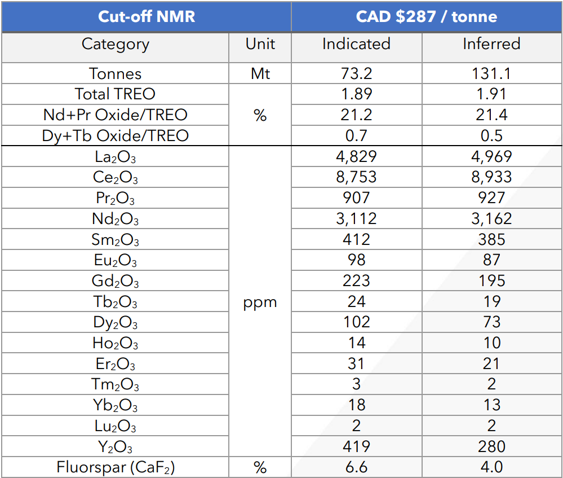
(a) TREO is sum of lanthanides (as oxides) + yttrium oxide
(b) NdPr distribution calculated as (Nd2O3 + Pr2O3) / TREO x 100
(c) CaF2 calculated from fluorine assay using factor of 2.055 (F to CaF2). Assumes all fluorine is contained within the mineral fluorite (“fluorspar”).
(d) Cut-off expressed as NMR ($)/t only considers payable elements La-Nd-Pr-Tb-Dy.
(e) TbDy distribution calculated as (Tb2O3 + Dy2O3) / TREO x 100.
(f) Prices shown are in CAD
(g) Differences may occur in totals due to rounding.
REE Distribution
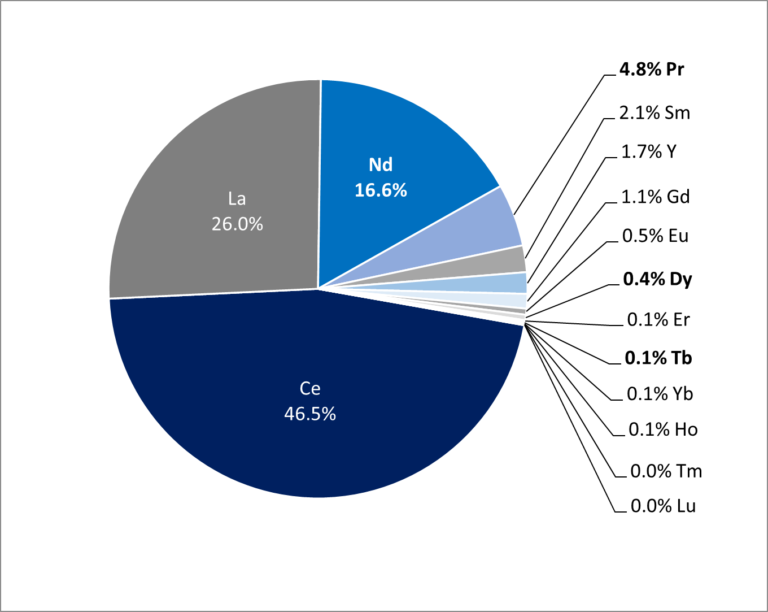
The updated MRE for the Ashram rare earth and fluorspar deposit firmly establishes it as a globally significant rare earth element (REE) deposit and one of the largest monazite-mineralized carbonatite REE deposits in the world: 73.2 million tonnes (Mt) at 1.89 percent TREO (total rare earth oxide) and 6.6 percent CaF2 (calcium fluoride) (indicated), and 131.1 Mt at 1.91 percent TREO and 4 percent CaF2 (inferred).
Ashram also continues to demonstrate very high NdPr (neodymium-praseodymium) distributions (that is, percentage of neodymium plus praseodymium oxide of the TREO) at 21.2 percent NdPr (indicated) and 21.4 percent NdPr (inferred), exceeding that of several active global producers. The favorable distribution starts at the surface, allowing these high-value elements to be targeted early on in a potential open-pit extraction scenario and, thereby, enhancing the project’s strategic value and operational efficiency.
This enrichment in the magnet feed REEs also extends to dysprosium (Dy) and terbium (Tb).
Mineral Resources are not mineral reserves and do not demonstrate economic viability. There is no certainty that all or any part of the Mineral Resources will be converted into Mineral Reserves.